
 Image 1 of 3
 Image 2 of 3
 Image 3 of 3
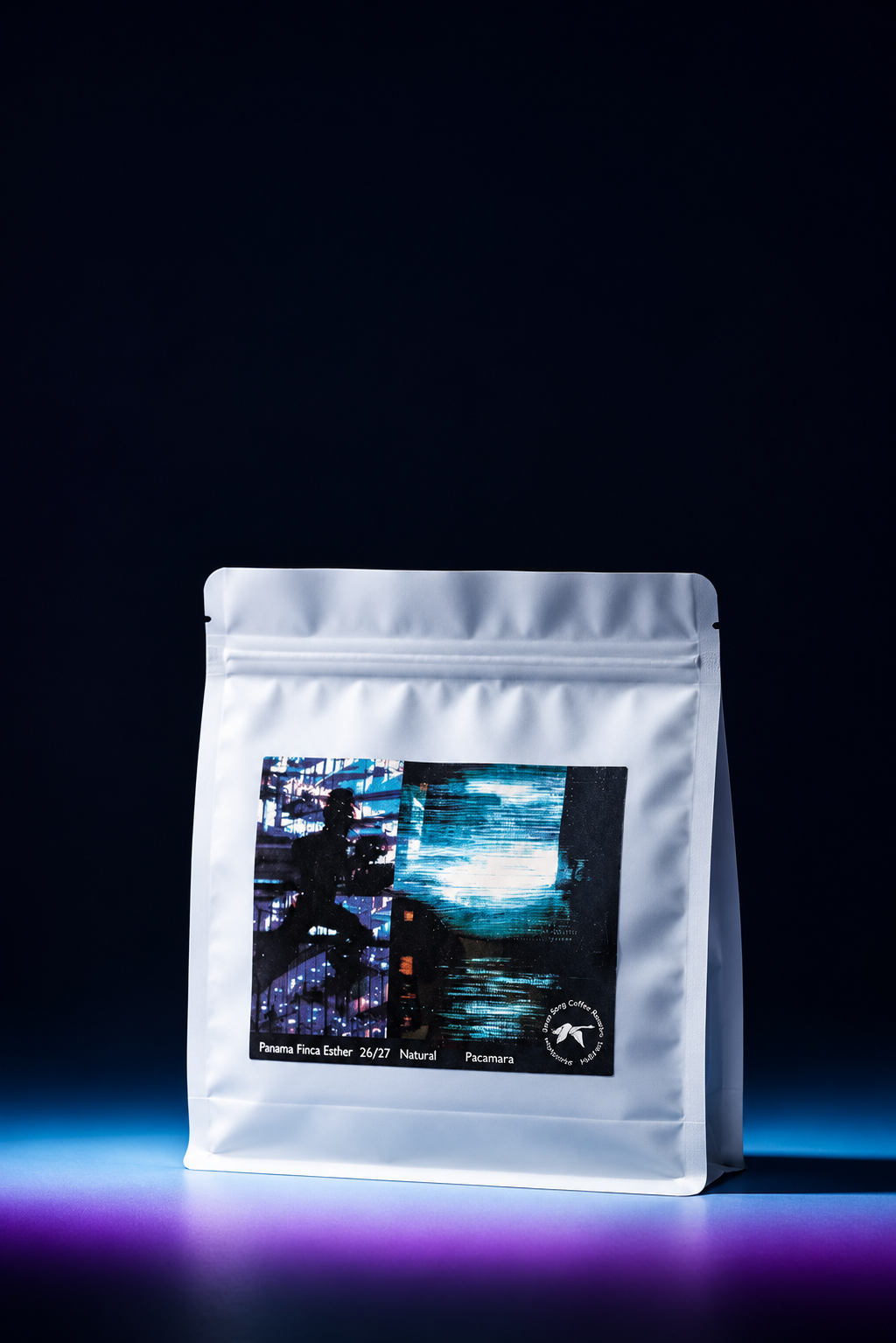
Origin: Panama
Region: Volacancito Arriba, Boquete
Farm/Producer: Finca Esther / Martin Santos Chavez
Altitude: 1450-1550m
Varietal: Pacamara
Process: Natural
Harvest: 2026/27
Direct Trade with MásCafé Panama
Cupping Score: 87.00
FOB(£)/Vol: £25.00/ 24 kg
Roasted for Espresso & Filter
We taste: Dr Pepper, Lemon Zest & Juicy
The Story
Finca Esther is a part of MásCafé Panama coffee farms in Boquete Panama located in the Chiriqui Province district of Boquete at 1550 Mts. Nested on the slopes of the Baru volcano, the conditions and diversity of the ecosystem create a unique terroir for growing coffee. The farm is led by Martin Santos Chavez and Esther Leung, who are at the forefront of innovation in processes such as yeasts, carbonic macerations, fermentations and slow drying. I began speaking with Martin across Instagram in 2021, exchanging samples and was blown away by the flavour of his coffee. Now in 2026, I’m really excited and proud to be entering our 4th year directly sourcing numerous lots to showcase the astounding work taking place on the farm’s.
This harvest I’m over the moon to have secured some of Martin’s pacamara - which was the first lot I bought from him back in 2021. The meticulous process begins in the fields, where each cherry is handpicked one by one by the Gnobe Bugle harvesters who migrate to the coffee-growing region of Boquete for the coffee harvest. Each time selecting the ripest cherries and moving throughout the rows of coffee trees with staggering accuracy.
After harvesting, the fruit is taken to the processing area where it is floated in vats of water to remove foreign matter, leaves, branches, and unripe beans. After this classification, the fruit passes through a rapid visual classification table, another step that allows us to detect fruit with defects. followed by a floating stage to remove any underdeveloped fruit.
The cherries are then pulped to separate the beans from the skin. Next, the beans are stripped from the mucilage immediately after the pulped is removed. After this process, the beans are gently dried in raised beds or canopies for slow drying over several days. This gradual slow drying approach ensures stability throughout and helps to enhances the coffee’s nuanced flavor profile. Roasting this light to highlight the delicate juicy aspects of this natural process that are fruit forward and make this coffee a favourite of mine.