Peach Co-Fermented Coffee: What It Is and Why It Tastes Like That
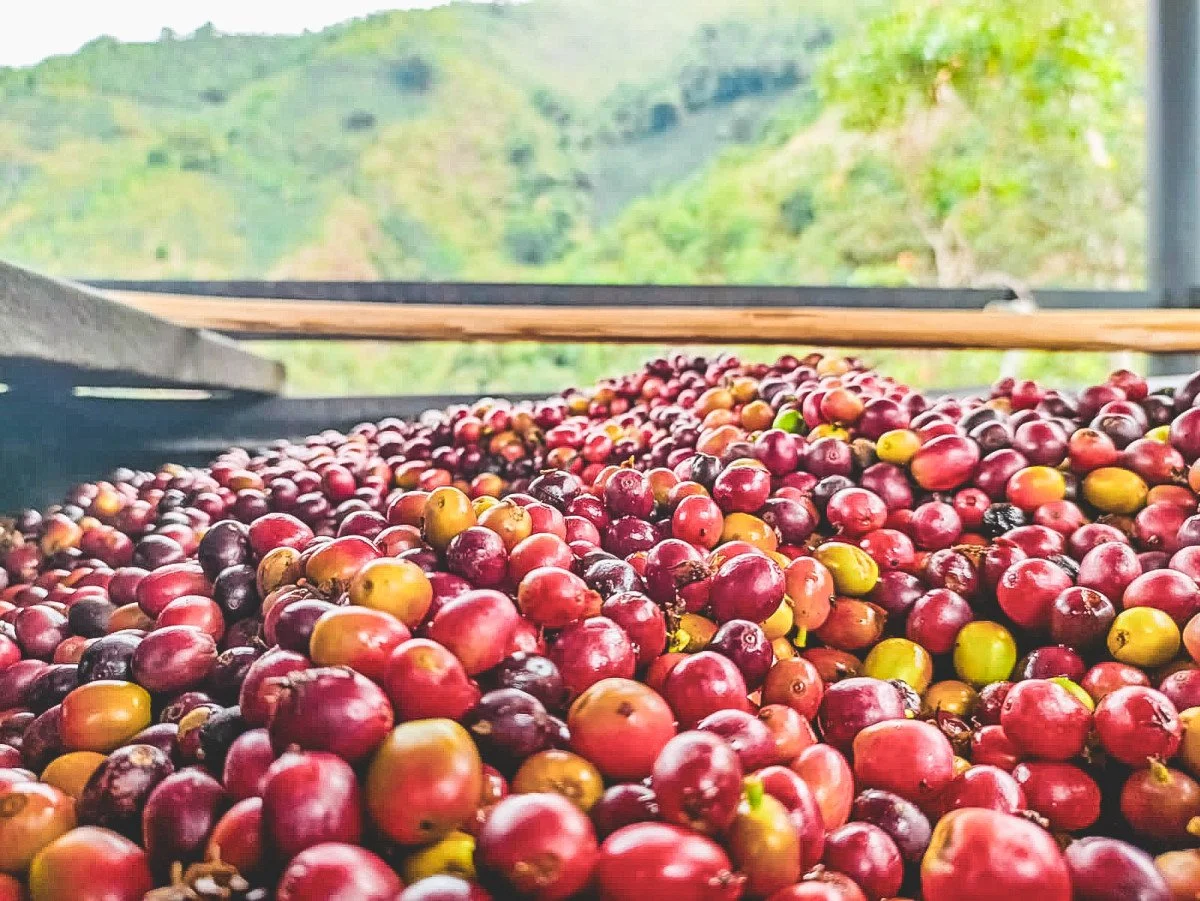
As our latest coffee from Felix Morantes is a Pink Bourbon/Rosado varietal from his farm Hoyo Frio in Santander, Colombia. As the process is something relatively new in terms of coffee processing. I felt it was time to write something about it.
Peach co-fermented coffee is one of the most expressive styles of modern coffee processing.
When done well, it can taste intensely juicy, floral, and sweet—often with notes of ripe peach, nectarine, apricot, honey, and candy-like fruit.
Despite how strong those flavours can be, no peach flavouring is added to the roasted coffee. The peach is used only during fermentation to guide how the coffee develops.
Coffee Fermentation, Briefly Explained.
After coffee cherries are picked, they must be fermented to remove the sticky mucilage and fruit around the bean. During this stage, naturally occurring yeasts and bacteria eat sugars in the coffee fruit and produce acids and aroma-building compounds.
Normally, this process is shaped by temperature, time, and whatever microbes are present at the farm. Peach co-fermentation changes the conditions so those microbes behave differently and allows for new possibilities.
What Makes Peach Special in Co-Fermentation?
Peach isn’t just chosen for flavour—it has a chemical makeup that strongly influences fermentation.
Peach juice contains:
High levels of simple sugars
Naturally high malic acid
Aromatic precursors associated with stone fruit and florals
When peach juice or crushed peach is added to the fermentation tank, it becomes extra food for the microbes and changes the acidity of the environment.
How Peach Changes the Fermentation
1. It Supercharges Yeast Activity
The sugars in peach feed fermentation yeasts that are especially good at creating:
Fruity aromas
Floral compounds
Sweet-smelling esters
These yeasts quickly become dominant, producing aroma compounds that later translate into peachy, candy-like, and nectar-sweet notes once the coffee is roasted.
2. It Creates Juicy, Soft Acidity
Peaches are rich in malic acid, the same acid found in apples and grapes. During fermentation:
Some of this malic acid remains.
Some is transformed by bacteria into softer acids.
The result is acidity that feels round and juicy rather than sharp or sour, often described as nectarine, white grape, or peach juice.
3. It Boosts Sweetness and Body
Peach juice adds extra nutrients that allow microbes to work more efficiently. This leads to:
More sugar breakdown
More sweetness perception
A fuller, smoother mouthfeel
This is why peach co-fermented coffees often taste syrupy or honey-like, even without any sugar added to the cup.
Why the Peach Flavour Stays After Roasting
During fermentation, aroma-building compounds move into the coffee seed itself. These compounds:
Are small enough to penetrate the bean
Survive drying and roasting
Turn into flavour during brewing
That’s why the peach character doesn’t disappear when the coffee is roasted—it’s now part of the bean’s chemistry.
Is Peach Co-Fermented Coffee “Flavoured Coffee”?
No.
The peach is removed after fermentation, before drying. Nothing is added after roasting. The flavour comes from natural fermentation chemistry, not syrups or extracts.
It’s similar to how wine can taste like berries without berries being added.
What Peach Co-Fermented Coffee Tastes Like
Common flavour notes include:
Ripe peach
Nectarine
Apricot
White grape
Honey
Floral candy or stone-fruit sweetness
The intensity can range from elegant and juicy to bold and dessert-like, depending on how long and how aggressively the fermentation is managed.
Why Some Peach Co-Ferments Taste “Too Much”
Because this process is powerful, as we've just learnt. It can go too far and really taste horrendous.
If fermentation isn’t carefully controlled:
Flavours can become overpowering
The coffee may lose origin character
Notes can taste artificial, even though they aren’t due to an imbalance.
Well-made peach co-ferments are balanced, where the fruit character supports the coffee rather than replacing it.
Who Peach Co-Fermented Coffee Is For
You’ll likely enjoy peach co-fermented coffee if you like:
Very fruit-forward coffees
Natural or anaerobic styles
Wine-like or juicy acidity
Distinctive, memorable cups
If you prefer clean, classic, or chocolate-led coffees, this style may feel too expressive and a step to far for you.
The Big Picture
Peach co-fermentation isn’t about adding peach flavour—it’s about steering fermentation so the microbes create stone-fruit-like aromas naturally.
It’s one of the clearest examples of how fermentation can shape coffee flavour as much as origin or roast. Though this style of coffee can divide opinion - I personally see that it's here to stay with the future for Coferments looking very bright.